

KOBO Sword Tips
Captains Log / KOBO Sword Tips
KOBO Sword Tips
Lessons learned while swordfishing
INTRO
While learning to swordfish we learned a few things that helped improve our success. At the time in 2010/2011 there was a lot less information online, relief shading maps were lacking, and several other gaps in our methods.
In Texas we have low currents and fish 2-6lbs of lead typically. A lot of fisherman also use the direct drop method because of this rather than "trolling" baits down. While both methods are different, once the bait is down a lot of the same fishing methods can be used.
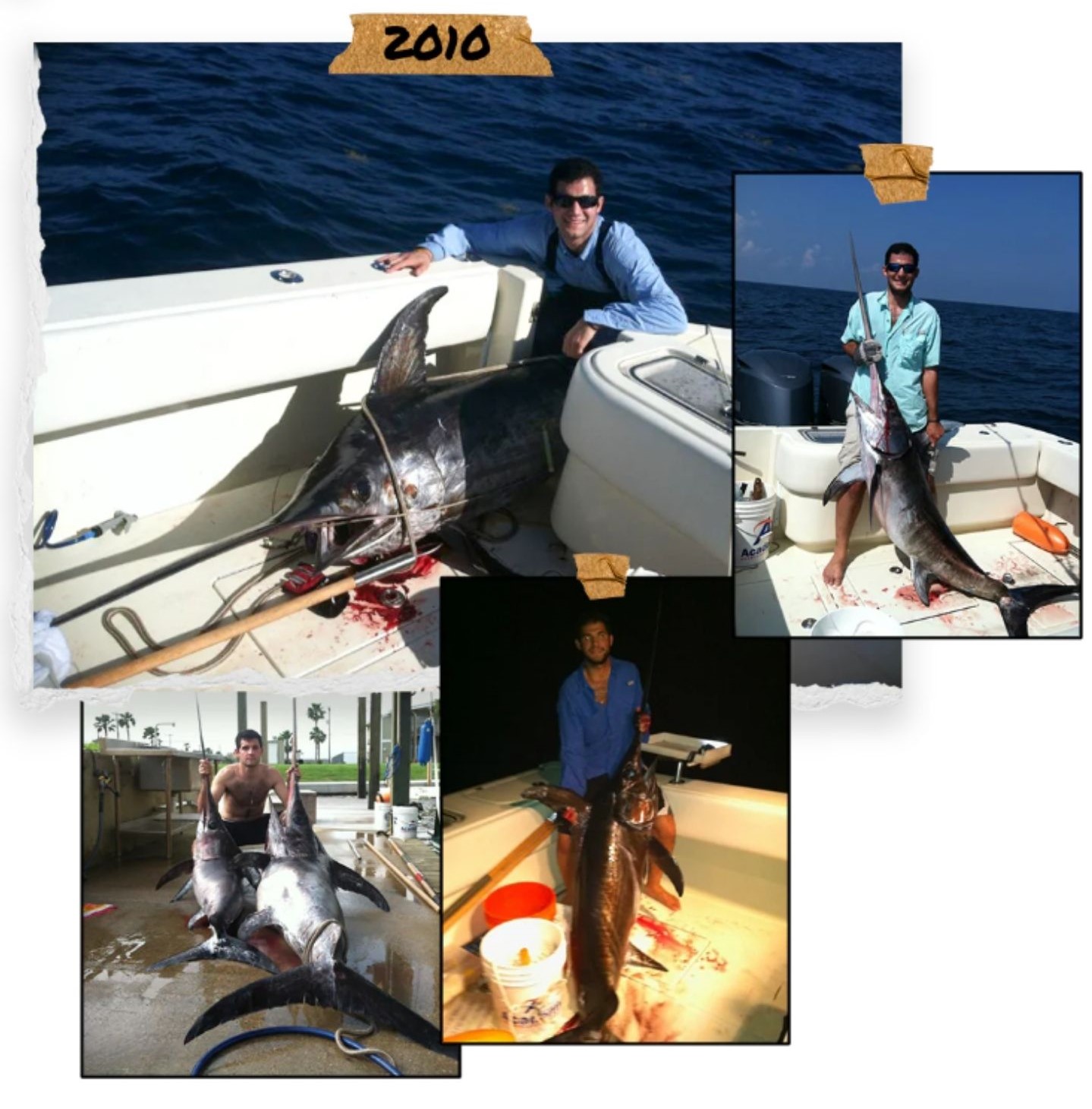
Early on we spent several trips fishing without bites. Looking back where we fished, its a lot of the same places we're catching fish now, only our tactics have improved. I would say one of the biggest issues we had were poor swimming baits, causing them to spin and not look natural. The second was when we had days with minimal current - I think our baits weren't swimming and therefore not presentable to a sword. Instead we caught things like hake with our bait resting on the bottom.
I think its important to visualize what's happening with the bait, the current, and what bottom structure might looks like. Below is what a high current situation could look like. I personally like to have a little bit of scope in the line. I imagine the bait is trying to catch up to the boat and in that case the bait is swimming. If we have have minimal current and the line is straight up and down, our bait is likely in the mud.

Tackle
Check your deep drop lights work
Tight slim connections
Polish/remove long line clip burrs
Care for your rod guides
Bait
Robustly rigged
Check they swim right before deploying
Sharpen your hooks
Expose hook
Electric Reels
Proper boat rigging for full electric power
Clean plugs for good electrical connection

Typical deep drop lights are rated to a couple hundreds of hours. This is a fair amount of time but usually the lights stay wet AFTER they come out of the water. This can cause them to continually run when not in use.
When crimping your bite leader to your swivel/wind-on use a small efficient loop to do so. We've seen several times where large/loose loops somehow get tangled during the drop or when a swordfish is whacking your bait
Long line clips can sometimes have burrs or rough areas. Take some fine sand paper and polish out the areas that contact or can contact your line. Over time a rough spot could work through your loops - either on your buoy or weight clip.
Today's braided lines rely on smooth guides and free spinning rod tips. Make sure not to damage these and inspect them from time to time. A small cut on a guide could easily cut your braid.
Swordfish brutally attack baits. The rod tip might just barely move, but to see that a sword must be hammering the bait. The more robust the bait, the more shots you can get at a fish that just won't eat.
Sharpen your hooks with a file for improved penetration and make sure nothing is blocking the hook.
Electric reels need good power. Depending on the size of reel, make sure your boat is properly rigged for their best performance. Corroded plugs and poor electrical connections are a good place to start if you have the proper gauge running to your outlets.
